
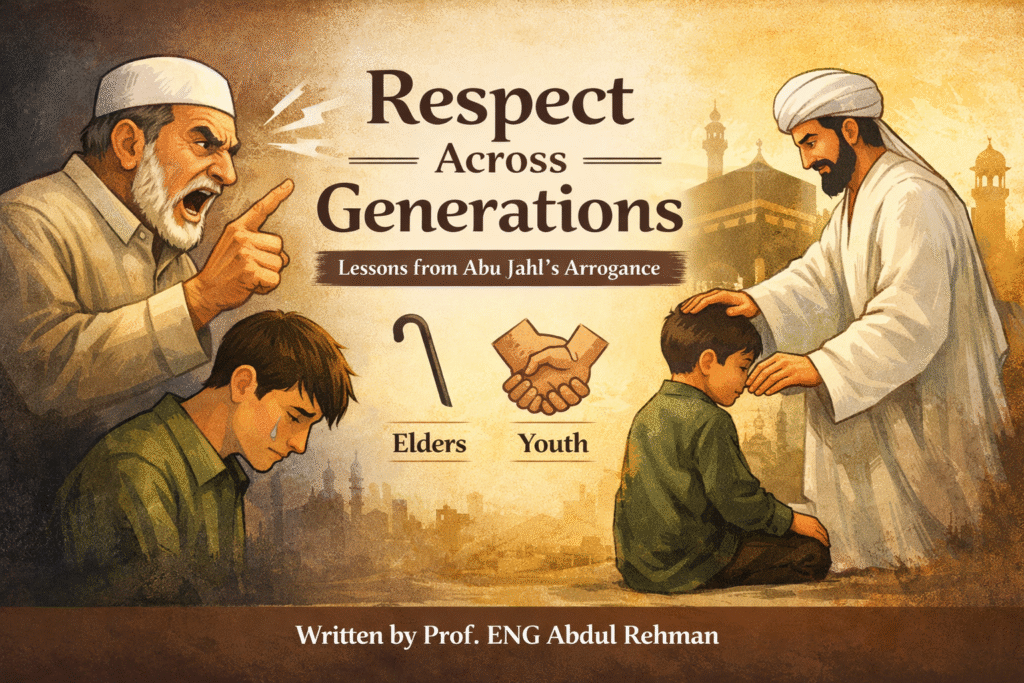
In many cultures, it is sadly common for older people to treat younger ones harshly out of pride or fear of losing respect. They may shout commands, forbid natural desires, punish harshly or even withdraw affection when a child disobeys, saying “We are older and wiser.” Islam strongly condemns this arrogance. The Qur’an and Sunnah repeatedly teach humility, mercy, and mutual respect between old and young. As Allah says, He does not love the arrogant.
Arrogance in the Qur’an
The Qur’an repeatedly condemns arrogance (takabbur). Allah warns: “And do not turn your nose up to people, nor walk with arrogance on the earth. Surely Allah does not love whoever is arrogant, boastful.” (Luqman 31:18). In Arabic: «وَلَا تُصَعِّرْ خَدَّكَ لِلنَّاسِ وَلَا تَمْشِ فِي الْأَرْضِ مَرَحًا». Another verse states: “I will turn away from My signs those who act unjustly with arrogance in the land…” (7:146). These verses make clear that Allah will not guide or bless those who insist on arrogance.
An example from early Islam is Abu Jahl (Amr ibn Hisham), a leader of Mecca. He scorned the young Prophet ﷺ, asking rhetorically, “Is this who Allah chose as His Messenger? Couldn’t He have revealed the Qur’an to a celebrated man of Mecca or Medina?”. This attitude of dismissing truth because one is “older” reflects the very pride that Allah forbids. No worldly rank or age can justify rejecting the truth of Islam.
Teachings of the Prophet ﷺ
The Prophet ﷺ strongly linked humility to faith. He taught that even a tiny amount of pride can bar one from Paradise. He said:
The Prophet ﷺ said: «مَنْ كَانَ فِي قَلْبِهِ مِثْقَالُ ذَرَّةٍ مِنْ كِبْرٍ لَا يَدْخُلُ الْجَنَّةَ» – “None who has the weight of an atom of arrogance in his heart will enter Paradise.”.
He clarified: “Allah is Beautiful and loves beauty; but pride is to reject the truth and to look down on people.”. In other words, arrogance is defined by belittling others. Even if one wears fine clothes or has status, rejecting truth and insulting people is what Allah hates.
Conversely, the Prophet ﷺ praised humility and compassion. He explicitly said:
Prophet ﷺ said: «مَنْ لَمْ يَرْحَمْ صَغِيرَنَا وَيَعْرِفْ حَقَّ كَبِيرِنَا فَلَيْسَ مِنَّا» – “Whoever does not show mercy to our young ones and does not honor our elders is not one of us.”.
This hadith makes it clear that a true believer must be both gentle with children and dignified with elders. The Prophet ﷺ exemplified this balance, being playful and affectionate with children, yet patient and respectful with older people. Islam also forbids ridiculing or insulting anyone. Allah commands: “O believers! Let not some of you ridicule others… And do not insult one another or call each other by [offensive] nicknames.” (49:11). This applies to all: no one – neither youth nor elders – may mock or humiliate another. In short, boasting and contempt have no place in a Muslim’s character.
Qur’anic Principles of Respect
The Qur’an enjoins kindness in family and society. For example, Allah says: “Worship Allah and associate nothing with Him, and [show] to parents [kindness]… Indeed, Allah does not like those who are arrogant, boastful.” (4:36). This verse explicitly pairs treating one’s parents well with avoiding arrogance. In other words, serving elders with respect is part of righteous behavior, and Allah’s hatred for pride is equally stressed.
Allah also advises: “Show forgiveness, enjoin what is good, and turn away from the ignorant.” (7:199). Applied at home, this means overlooking minor faults and responding with patience instead of anger. The Qur’an never commands a father to shout at children or a grandfather to belittle grandchildren. Instead, it highlights forgiveness and mercy. Allah even describes the believers as “Al-Ra’ūfu’l-Raḥīm” – the Most Kind and Most Merciful (57:27) – a quality epitomized by His Prophet’s treatment of all ages.
What Elders Should Do
Islam encourages elders to model humility and kindness. They should set the tone for respect. Key practices include:
- Speak kindly and patiently. Avoid yelling or insulting when giving instructions. The Prophet ﷺ emphasized gentle speech; family members deserve calm, respectful words.
- Show affection and appreciation. Praise good behavior, hug or smile at children, and openly show love. The Prophet ﷺ often kissed his grandchildren and praised them, teaching that kindness strengthens bonds.
- Teach, don’t dominate. Explain rules and correct mistakes with wisdom. Islam forbids unjust harshness. If a child errs, correct them gently. Even the Prophet ﷺ taught a forgetful boy the prayer rather than scolding.
- Maintain justice and mercy. Avoid obvious favoritism or unfairness among children. Justice earns respect; cruelty breeds rebellion. If reprimanding, address the action, not label the child. Mercy is rewarded in Islam.
- Be humble before Allah. Remember that Allah judges by piety, not by age. An elder should reflect, “Perhaps they are better than me before Allah.” This outlook curbs tyrannical pride. A proud elder will face distance from his family, while a humble parent is lovingly honored by his children.
By embodying these traits, elders earn genuine respect rather than demand it. They fulfill their role as mentors and caregivers, following the Prophet’s example. Indeed, Allah promises to raise the humble and scatter the proud – a lesson lived by the righteous companions and early believers.
What Young Ones Should Do
Children and younger people have clear duties too. Islam stresses obedience to parents and courteous treatment of elders (so long as it involves no sin). This includes:
- Honor elders in action. Greet parents and grandparents respectfully, allow them to enter or sit first, and assist them (for example, by offering a chair). Traditional etiquette includes a child gently taking an elder’s hand or placing it on their forehead as a sign of respect. Such actions express love and humility.
- Speak respectfully. Use polite words and a calm tone. Even in disagreement, do not shout or curse. If angry, step away and express your feelings later calmly. The Prophet ﷺ warned against the bitterness that harsh words can sow between families.
- Help and obey. Assist with chores and errands willingly. Obedience to rightful requests of elders is highly valued. Serving one’s parents and elders is seen as a form of worship. The Qur’an explicitly links kindness to parents with righteousness (31:14–15).
- Correct gently when needed. If you must advise an elder (for their benefit), do so with the utmost respect. For instance, if a forgetful elder neglects prayer, a humble reminder is allowed, given in private and kindly. Even then, one should pray for them and say “My Lord, have mercy on them as they raised me when I was small.” (17:24) Gratitude and dua strengthen family bonds.
- Pray for and thank them. Regularly ask Allah to bless your parents and elders, and verbally thank them for their care and guidance. Gratitude nurtures love.
By fulfilling these duties, the young uphold Islamic manners and smooth family relations. A hadith warns that Allah will not even gaze on the Day of Judgment at a youth who disrespects his elders (Sunan Abū Dāwūd). In practice, the earliest Muslims exemplified respect: for example, ʿAlī ibn Abī Ṭālib showed such deference to his elder, Caliph ʿUmar, that ʿUmar (smiling) once said, “I was chosen to lead while you were commanded to ride for me.” This mutual respect pleased Allah and set a noble example.
Practical Harmony
Putting these ideals into practice strengthens families. Simple steps help: an elder might say calmly, “Let’s talk after dinner,” instead of yelling immediately. A child might respond, “Yes, I’ll come speak with you then.” Both sides should avoid insulting phrases like “shut up” or “you’ll see!”, which breed fear instead of understanding. Community leaders and mosques often teach these etiquettes, reminding worshippers of the Prophet’s gentleness with his family. Parents focusing on positive reinforcement (e.g. praising a prayer well done) raise grateful, respectful children. Children learning from patient, humble elders grow to be kind leaders themselves.
There is simply no space for arrogance in Islam. Every tradition – from the Prophet ﷺ to righteous parents today – emphasizes dignity and compassion. Worldly status never entitles one to mistreat another. Instead, families are encouraged to emulate the Prophet ﷺ and his companions, who treated everyone with kindness. In this way, love and respect replace fear and ego.
Conclusion
Islamic teachings make it unequivocally clear: ego has no place in family relationships. Both Qur’an and Hadith demand respect without arrogance. “Whoever does not show mercy to our young and does not honor our elders is not one of us”. In short, true honor comes from piety and good character, not age or rank. Muslims are urged to embrace humility as taught by Allah and His Messenger ﷺ, and to treat each other with kindness. Only the humble and kind-hearted will truly earn Allah’s love and success in this life and the next.
Key Takeaways:
- Allah condemns arrogance and loves humility. Arrogance and contempt are repeatedly denounced.
- The Prophet ﷺ made clear that a believer must show compassion to children and respect for elders. Neglecting either is incompatible with faith.
- In practical terms, elders should lead by patience and mercy, and the young should respond with obedience and politeness. These conduct guidelines – grounded in Qur’an and Sunnah – build strong, respectful families in Islam.
Sources: Relevant Qur’anic verses and Prophetic traditions have been cited above (see references). The Arabic phrases in quotes are from the original texts; the English is a faithful meaning. All teachings align with the Qur’an and authentic hadiths.
Links to the References:
https://myislam.org/surah-hujurat/ayat-11
https://quran.com/al-araf/146-156
https://sunnah.com/search?q=No+one+who+has+an+atom%E2%80%99s+weight+of+arrogance+shall+enter+Jannah
https://legacy.quran.com/4/36
https://quran.com/luqman/18
Leave out your thoughts in the comment section!
A quick Question: “If an elder can’t give respect to his/her young one, he/she has any right to demand it?”